The culture of Portugal is a very rich result of a complex flow of many different civilisations during the last millennia. From prehistoric cultures to its pre-Roman civilisations ( such as the Lusitanians , the Gallaeci , the Celtici and the Cynetes , among others ), through their contacts with the Phoenician - Carthaginian world, the Roman period (see Hispania , Lusitania and Gallaecia ), the Germanic invasions of the Suebi , Buri (see Kingdom of the Suebi ) and Visigoths (see Visigothic Kingdom ), Viking incursions , Sephardic-Jewish settlement and finally the Moorish Umayyad invasion of Hispania and subsequent expulsion during the Reconquista have all left an impression on the culture and history of the country. The name Portugal itself reveals much of the country's early history and derives from the Roman name Portus Cale , a Latin name meaning "Port of Cale" (Cale is probably a word of Celtic origin - Cailleach-Bheur her other name; the mother goddess of the Celtic people as in Calais, Caledonia , Beira.
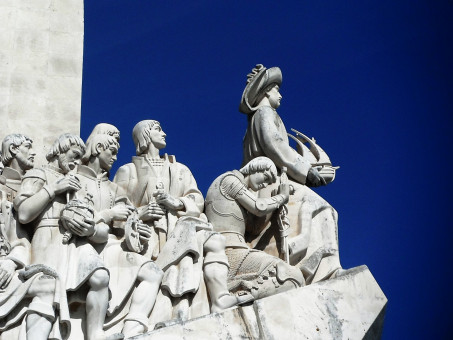
 She was the one who created mountains and valleys with a hammer; the one who hid in stones and trees - Mother Nature), later transformed into Portucale and finally into Portugal , which originated as a county of the Kingdom of León ( see County of Portugal ) and became an independent kingdomin 1139 . During the 15th and 16th centuries, Portugal was a major economic, political and cultural power, its empire stretching from the Americas to Africa to various regions of Asia and Oceania.
Portugal, a country with a long history, houses several ancient architectural structures as well as typical art, furniture and literature collections that reflect and record the events that shaped the country and its peoples. It has a large number of cultural sites, ranging from museums to ancient church buildings and medieval castles, testifying to its rich national heritage. Portugal is home to fifteen UNESCO World Heritage Sites, ranking eighth in Europe and 17th in the world.


